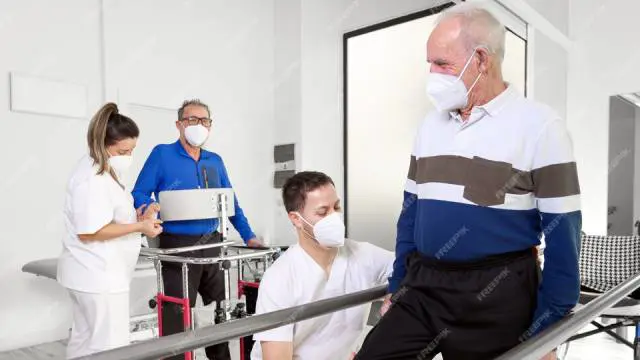
Physiotherapy Knowledge Studies
Learningidol
Independent Online Learning • Updated 2026 Content • Transparent Pricing • Digital Certificate Included
Summary
- Reed Courses Certificate of Completion - Free
- Final Exam (included in price)
- Tutor is available to students
Add to basket or enquire
Overview
Certificates
Reed Courses Certificate of Completion
Digital certificate
- Show recruiters you've mastered in-demand skills
- Boost your CV and job applications instantly
- Share on LinkedIn to stand out from other candidates
- Transcript of completion included
Reed Courses Certificate of Completion
Digital certificate
- Show recruiters you've mastered in-demand skills
- Boost your CV and job applications instantly
- Share on LinkedIn to stand out from other candidates
- Transcript of completion included
Assessment details
Final Exam
Included in course price
Curriculum
This course contains
Format: 24 PDFs, 1 Article and 1 Quiz
Duration: 2h and 9m
-
Disclaimer 01:00
-
Lecture 1: Introduction to Physiotherapy 12:00
-
Lecture 2: Human Anatomy and Physiology 17:00
-
Lecture 3: Assessment and Diagnosis 13:00
-
Lecture 4: Treatment Modalities 13:00
-
Lecture 5: Specialized Areas in Physiotherapy 16:00
-
Lecture 6: Clinical Practice and Case Studies 15:00
-
Lecture 7: Research and Development in Physiotherapy 14:00
-
Lecture 8: Professional Development and Career Advancement 12:00
-
Assessment 16:00
Description
Physiotherapy Knowledge Studies offers a comprehensive theoretical framework for understanding rehabilitation science, movement analysis, and professional practice within healthcare environments. The programme presents Physiotherapy as an evidence-informed discipline requiring structured assessment, ethical awareness, and collaborative care principles.
The course begins with an introduction to the history and evolution of Physiotherapy, examining its development as a rehabilitation-focused healthcare profession. Learners analyse the roles and responsibilities commonly associated with physiotherapists, including patient-centred care, ethical conduct, and professional standards.
Human anatomy and physiology modules explore the musculoskeletal system, including muscle function, joint mechanics, and movement coordination. The nervous system is examined in relation to motor control, sensory feedback, and neuromuscular integration. Cardiovascular and respiratory systems are analysed to understand endurance, circulation, and oxygen transport during rehabilitation processes.
Assessment and diagnosis modules introduce patient evaluation frameworks, movement screening concepts, and the theoretical interpretation of diagnostic imaging. Learners examine how structured assessment supports clinical reasoning and safe rehabilitation planning.
Treatment modalities are explored conceptually, including manual therapy principles, electrotherapy awareness, and exercise prescription frameworks. Emphasis is placed on understanding theoretical mechanisms of action rather than practical clinical certification. Rehabilitation planning principles are analysed to illustrate progression and outcome monitoring.
Specialised areas of Physiotherapy such as paediatric, geriatric, and sports-focused contexts are examined to demonstrate how age, activity level, and health conditions influence treatment considerations. Learners explore how rehabilitation strategies adapt across diverse populations.
Clinical practice modules focus on decision-making models, case-based analysis, and multidisciplinary teamwork awareness. The importance of collaboration with other healthcare professionals is emphasised to reflect integrated care environments.
Research and development modules introduce research methodologies, literature appraisal skills, and innovation trends within Physiotherapy. Learners examine how evidence-based practice informs modern rehabilitation approaches.
Professional development modules address continuing education, leadership principles, and legal awareness within healthcare systems. Regulatory and statutory frameworks are discussed from an academic perspective to clarify professional boundaries.
Throughout the programme, Physiotherapy is presented as a regulated healthcare discipline requiring accredited education and statutory registration. This course supports theoretical understanding and academic progression rather than clinical qualification.
Upon successful completion of the assignment and final examination, learners receive a digital certificate recognising their academic engagement.
Who is this course for?
This course is suitable for:
- Individuals interested in studying Physiotherapy theory
- Healthcare support staff seeking academic understanding
- Students considering further education in rehabilitation sciences
- Fitness professionals expanding knowledge of movement science
- Learners interested in healthcare systems awareness
The programme supports academic exploration and does not replace regulated clinical training.
Requirements
There are no formal entry requirements. However, learners should possess basic English proficiency and an interest in healthcare sciences to engage effectively with Physiotherapy concepts.
A reliable internet connection and suitable device are required. Learners must complete all module assessments, a written assignment, and the final examination in order to receive their digital certificate of completion.
Career path
Knowledge of Physiotherapy principles may support progression into rehabilitation support roles, healthcare assistant positions, clinical administration, or further academic study within regulated physiotherapy and healthcare professions.
Questions and answers
There are currently no Q&As for this course. Be the first to ask a question.
Reviews
Currently there are no reviews for this course. Be the first to leave a review.

Add to basket or enquire
Course provided by


Legal information
This course is advertised on Reed.co.uk by the Course Provider, whose terms and conditions apply. Purchases are made directly from the Course Provider, and as such, content and materials are supplied by the Course Provider directly. Reed is acting as agent and not reseller in relation to this course. Reed's only responsibility is to facilitate your payment for the course. It is your responsibility to review and agree to the Course Provider's terms and conditions and satisfy yourself as to the suitability of the course you intend to purchase. Reed will not have any responsibility for the content of the course and/or associated materials.
