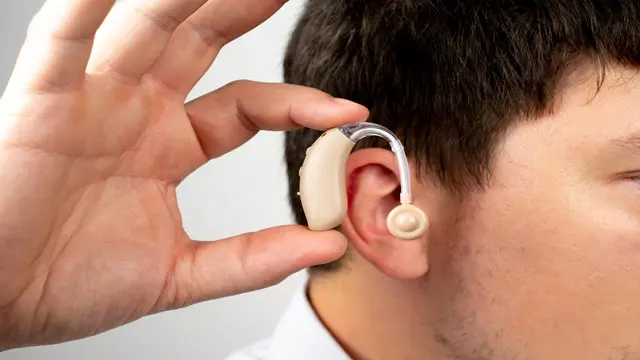
Audiology Level 3 Advanced Diploma
Update on 2023 | CPD Certified | Free Digital Certificate | Free Exam | Lifetime Access
Course Line On Demand
Summary
- Reed Courses Certificate of Completion - Free
- Tutor is available to students
Add to basket or enquire
Overview
Welcome to Audiology Level 3 Advanced Diploma, a comprehensive and engaging course designed to provide you with in-depth knowledge and practical skills in Audiology. Throughout this course, we will explore various aspects of Audiology and delve into its fundamental concepts, advanced techniques, and real-world applications.
Our primary objective in Audiology Level 3 Advanced Diploma is to equip you with a solid foundation in Audiology. Whether you are a beginner or an experienced professional looking to expand your expertise, this course will cater to your needs and help you achieve your learning goals.
During our journey together, you will have the opportunity to:
- Gain a thorough understanding of the core principles and theories that underpin Audiology.
- Acquire practical skills through hands-on exercises, projects, and real-world examples.
- Explore cutting-edge advancements and emerging trends in the field of Audiology.
- Prepare for future opportunities, such as further education, career advancement, or entrepreneurship, in the field of Audiology.
- Reflect on your learning journey, celebrate your achievements, and gain the confidence to excel in Audiology.
By the end of Audiology Level 3 Advanced Diploma, you will have gained a comprehensive understanding of Audiology and developed the skills necessary to succeed in this dynamic field. Whether you choose to pursue further education, enter the job market, or embark on entrepreneurial ventures, this course will lay a strong foundation for your future endeavours.
We are excited to have you join us on this educational journey, and we look forward to helping you unlock your full potential in Audiology Level 3 Advanced Diploma. Let's get started!
Why should you choose Course Line?
When it comes to quality education and professional development, Course Line stands out as one of the most prestigious learning providers. As a certified institution by UKRLP & CPD Group, we have a proven track record of excellence, having successfully taught over 20,000+ students and counting.
Curriculum
-
Disclaimer 01:00
-
Lecture 1: Introduction to Audiology 11:00
-
Lecture 2: Anatomy and Physiology of the Auditory System 08:00
-
Lecture 3: Hearing Assessment 12:00
-
Lecture 4: Pediatric Audiology 10:00
-
Lecture 5: Balance Assessment and Vestibular Rehabilitation 10:00
-
Lecture 6: Amplification and Assistive Listening Devices 10:00
-
Lecture 7: Tinnitus and Hyperacusis Management 11:00
-
Lecture 8: Auditory Rehabilitation and Communication Strategies 12:00
-
Lecture 9: Clinical Practicum and Case Studies 12:00
-
Lecture 10: Research Methods in Audiology 14:00
-
Assessment 09:00
Course media
Description
Welcome to the course outline for Audiology Level 3 Advanced Diploma. In this comprehensive learning journey, we will explore the depths of Audiology, delving into its core principles, practical examples, and advanced techniques. Through a series of engaging lectures and exercises, you will gain the knowledge and skills necessary to excel in the field of Audiology Level 3 Advanced Diploma.
*****Audiology Level 3 Advanced Diploma Course Syllabus*****
Lecture 1: Introduction to Audiology
- Lesson 1 - Introduction to Audiology as a Profession
- Lesson 2 - History and Development of Audiology
- Lesson 3 - Roles and Responsibilities of an Audiologist
- Lesson 4 - Ethical and Professional Standards in Audiology
Lecture 2: Anatomy and Physiology of the Auditory System
- Lesson 1 - Structure and Function of the Outer Ear
- Lesson 2 - Structure and Function of the Middle Ear
- Lesson 3 - Structure and Function of the Inner Ear
- Lesson 4 - Central Auditory Pathways and Brainstem Auditory Evoked Potentials (BAEPs)
Lecture 3: Hearing Assessment
- Lesson 1 - Pure Tone Audiometry
- Lesson 2 - Speech Audiometry
- Lesson 3 - Immittance Audiometry
- Lesson 4 - Otoacoustic Emissions (OAEs)
- Lesson 5 - Auditory Brainstem Response (ABR) Testing
Lecture 4: Pediatric Audiology
- Lesson 1 - Developmental Auditory Milestones
- Lesson 2 - Pediatric Hearing Assessment Techniques
- Lesson 3 - Management and Rehabilitation of Pediatric Hearing Loss
- Lesson 4 - Auditory Processing Disorders in Children
Lecture 5: Balance Assessment and Vestibular Rehabilitation
- Lesson 1 - Anatomy and Physiology of the Vestibular System
- Lesson 2 - Balance Assessment Techniques
- Lesson 3 - Videonystagmography (VNG) and Electronystagmography (ENG)
- Lesson 4 - Vestibular Rehabilitation and Treatment Approaches
Lecture 6: Amplification and Assistive Listening Devices
- Lesson 1 - Hearing Aid Technology and Selection
- Lesson 2 - Verification and Validation of Hearing Aids
- Lesson 3 - Assistive Listening Devices (ALDs) for Hearing Loss
- Lesson 4 - Cochlear Implants and Bone Anchored Hearing Systems
Lecture 7: Tinnitus and Hyperacusis Management
- Lesson 1 - Understanding Tinnitus and Hyperacusis
- Lesson 2 - Assessment and Evaluation of Tinnitus and Hyperacusis
- Lesson 3 - Counseling and Management Strategies
- Lesson 4 - Sound Therapy and Habituation Techniques
Lecture 8: Auditory Rehabilitation and Communication Strategies
- Lesson 1 - Auditory Training and Rehabilitation Programs
- Lesson 2 - Communication Strategies for Individuals with Hearing Loss
- Lesson 3 - Speechreading and Communication Tactics
- Lesson 4 - Psychosocial Implications of Hearing Loss
Lecture 9: Clinical Practicum and Case Studies
- Lesson 1 - Clinical Practicum Guidelines and Expectations
- Lesson 2 - Case Studies and Problem-Solving Approaches
- Lesson 3 - Patient Management and Counseling Skills
- Lesson 4 - Interdisciplinary Collaboration in Audiology
Lecture 10: Research Methods in Audiology
- Lesson 1 - Introduction to Research in Audiology
- Lesson 2 - Research Design and Methodology
- Lesson 3 - Data Collection and Analysis
- Lesson 4 - Ethical Considerations in Audiology Research
Assessment Process
Upon completing the Audiology Level 3 Advanced Diploma course, you will be required to undertake a multiple-choice evaluation in order to gauge your understanding of the material covered.
If you do not achieve the minimum passing score, you will have the opportunity to retake the assessment without incurring any additional cost.
Certification
After successfully completing this Audiology Level 3 Advanced Diploma course, you will get an instantFreedigital certificate.
Who is this course for?
Audiology Level 3 Advanced Diploma is designed to cater to a wide range of individuals who are eager to enhance their knowledge and skills in Audiology.
This course is suitable for:
- Beginners in Audiology
- Professionals
- Students
- Career changers
No matter your background or level of experience, Audiology Level 3 Advanced Diploma offers a comprehensive learning experience that caters to your specific needs. Join us on this educational journey and unlock your potential in Audiology today!
Requirements
Requirements for the Audiology Level 3 Advanced Diploma course:
- No Prior Knowledge Required
- Basic Computer Skills.
- Internet access.
- Familiarity with English
Career path
Completing Audiology Level 3 Advanced Diploma course can open exciting career opportunities in various fields related to Audiology. Here are three potential career paths you can pursue after completing Audiology Level 3 Advanced Diploma:
- Audiology Specialist
- Audiology Researcher
- Audiology Educator
Questions and answers
What will I need to do after completion of this course to become an audiologist ?
Answer:Hi Sarah, Thank you for your interest in our course. You need license to practice as an audiologist. Regards Course Line
This was helpful.
Certificates
Reed Courses Certificate of Completion
Digital certificate - Included
Will be downloadable when all lectures have been completed.
Reviews
Currently there are no reviews for this course. Be the first to leave a review.
Add to basket or enquire
Course provided by

Legal information
This course is advertised on reed.co.uk by the Course Provider, whose terms and conditions apply. Purchases are made directly from the Course Provider, and as such, content and materials are supplied by the Course Provider directly. Reed is acting as agent and not reseller in relation to this course. Reed's only responsibility is to facilitate your payment for the course. It is your responsibility to review and agree to the Course Provider's terms and conditions and satisfy yourself as to the suitability of the course you intend to purchase. Reed will not have any responsibility for the content of the course and/or associated materials.