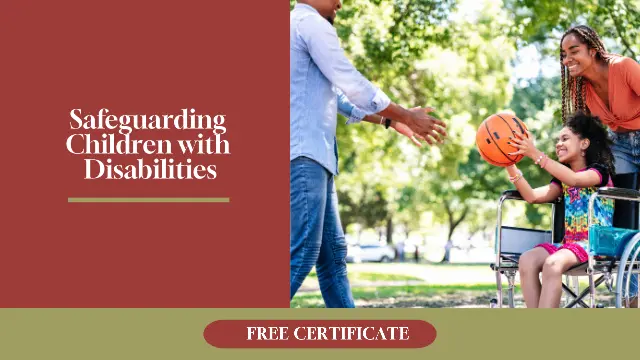
Safeguarding Children with Disabilities
METAVERSESKILLS
Interactive Video Lessons | Free E-Certificate | Tutor Support
Summary
- Certification of Completion - Free
- Reed Courses Certificate of Completion - Free
- Tutor is available to students
Add to basket or enquire
Overview
Certificates
Reed Courses Certificate of Completion
Digital certificate
- Show recruiters you've mastered in-demand skills
- Boost your CV and job applications instantly
- Share on LinkedIn to stand out from other candidates
- Transcript of completion included

Certification of Completion
Digital certificate
Reed Courses Certificate of Completion
Digital certificate
- Show recruiters you've mastered in-demand skills
- Boost your CV and job applications instantly
- Share on LinkedIn to stand out from other candidates
- Transcript of completion included
Certification of Completion
Digital certificate
Curriculum
This course contains
Format: 15 Videos (with subtitles and transcripts)
Duration: 0h and 31m
Description
Module 1: Introduction to Safeguarding Children with Disabilities
- Understanding the specific vulnerabilities of children with disabilities
- Legal frameworks and guidelines for safeguarding children with disabilities
- Responsibilities of individuals and organizations in safeguarding
Module 2: Recognizing Abuse and Neglect in Children with Disabilities
- Identifying signs and indicators of abuse and neglect in children with disabilities
- Understanding the impact of disabilities on disclosure and communication
- Cultural considerations and challenges in recognizing abuse
Module 3: Creating a Safe and Inclusive Environment
- Designing an inclusive environment that promotes safety and well-being
- Adapting safeguarding policies and procedures to meet the needs of children with disabilities
- Collaboration with families, caregivers, and professionals to ensure a holistic approach
Module 4: Communication and Empowerment
- Effective communication strategies with children with disabilities
- Empowering children with disabilities to understand their rights and boundaries
- Supporting children in self-advocacy and building resilience
Module 5: Preventing Abuse and Exploitation
- Identifying potential risks and vulnerabilities specific to children with disabilities
- Teaching personal safety skills and boundaries
- Implementing protective measures and promoting healthy relationships
Module 6: Responding to Disclosure and Suspected Abuse
- Safe and appropriate ways to respond when a child with a disability discloses abuse
- Understanding reporting procedures and obligations
- Emotional support and safeguarding during the disclosure process
Module 7: Collaborating with Multidisciplinary Teams
- Working collaboratively with professionals from different disciplines (e.g., social workers, healthcare providers, educators)
- Sharing information and coordinating safeguarding efforts
- Case conferences and child protection plans for children with disabilities
Module 8: Safeguarding Online and Digital Safety
- Recognizing the risks of online abuse and exploitation for children with disabilities
- Promoting safe internet and social media usage
- Supporting parents, caregivers, and children in navigating digital spaces
Module 9: Continuous Improvement and Best Practices
- Evaluating safeguarding practices and identifying areas for improvement
- Learning from case studies and best practice examples
- Engaging in ongoing training and staying updated with safeguarding developments
Who is this course for?
This course is designed for:
- Teachers, teaching assistants, and special education professionals
- Social workers and child protection officers
- Healthcare professionals (nurses, therapists, pediatricians)
- Caregivers, foster parents, and support workers
- Volunteers and charity workers supporting children with disabilities
Requirements
- No prior safeguarding experience required, but a basic understanding of child protection is beneficial
- Suitable for professionals working with children, including educators, healthcare workers, and social workers
- Access to a computer and internet for course materials and assessments
Career path
Completing this course enhances your career prospects in:
- Child protection and safeguarding roles
- Social work and community support services
- Special education and disability support services
- Healthcare and pediatric care
- Non-profit organizations and advocacy groups
Questions and answers
There are currently no Q&As for this course. Be the first to ask a question.
Reviews
Currently there are no reviews for this course. Be the first to leave a review.

Add to basket or enquire
Course provided by


Legal information
This course is advertised on Reed.co.uk by the Course Provider, whose terms and conditions apply. Purchases are made directly from the Course Provider, and as such, content and materials are supplied by the Course Provider directly. Reed is acting as agent and not reseller in relation to this course. Reed's only responsibility is to facilitate your payment for the course. It is your responsibility to review and agree to the Course Provider's terms and conditions and satisfy yourself as to the suitability of the course you intend to purchase. Reed will not have any responsibility for the content of the course and/or associated materials.
